Plastic pollution in our oceans is a growing environmental crisis, threatening marine ecosystems and free-living animals around the globe. While single-use plastics and other consumer waste are often highlighted as major contributors, the fishing industry is a significant and frequently overlooked source of ocean plastic.
From abandoned fishing nets to discarded gear, the fishing industry’s practices devastate marine habitats while perpetuating a system of extreme exploitation. This essay explores the impact of fishing-related plastic pollution from two critical angles: environmental harm and the broader implications of the animal industry.

Environmental Impact of Fishing-Related Plastic Pollution
While estimates vary depending on the study and the specific area of the ocean being measured, the general consensus is that the fishing industry discards a significant amount of plastic into our oceans on a daily basis.
• Global Estimates: Fishing gear, often referred to as “ghost gear,” is estimated to account for at least 10% of all plastic pollution in the oceans globally. Some sources put this figure closer to 20%.
• By Type: For larger plastic items floating on the ocean’s surface, fishing gear can account for as much as 70% of the total by weight.
• Concentrated Areas: In certain areas, particularly large offshore garbage patches where ocean currents concentrate debris, the proportion is much higher. A 2022 study of the Great Pacific Garbage Patch found that between 75% and 86% of floating plastics (larger than five centimeters) could be from abandoned, lost or discarded fishing gear.
Fishing nets are typically made of durable synthetic materials like nylon and polyethylene, which can persist in the environment for hundreds of years. As they slowly break down into micro-plastics, they infiltrate marine food webs, threatening organisms from plankton to whales.

“Ghost Gear”
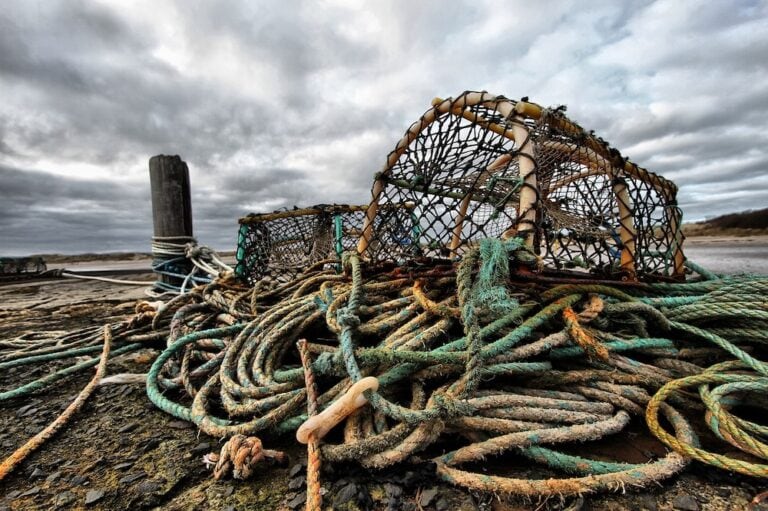
Ghost gear includes nets, lines, traps, and other equipment that continues to trap and kill marine animals long after being abandoned. Ghost gear causes disproportionate damage relative to its volume because it actively entangles fish, turtles, seabirds, and mammals in a deadly cycle of “ghost fishing.” Trapped animals often die and then act as bait, attracting scavengers and other animals who then also get trapped.
While a precise number is impossible to calculate, some organizations have provided annual estimates for the global impact of ghost gear, figuring that it kills at least 136,000 seals, sea lions, and large whales every year. Statistics that include other marine animals such as sea turtles, sharks, and birds (conservatively) estimate the number to be over 650,000.
As with other statistics from the fishing industry, the total number of lives lost can never be appropriately approximated. Calculated by weight rather than by number, and estimated in the trillions, individual fish themselves are the uncountable and unaccounted for victims of the worldwide demand for fish.

Over the decades that a single ghost net can persist, the cumulative death toll is enormous. A study of just 870 ghost nets recovered off the coast of Washington State found that they had collectively trapped over 32,000 marine animals. Given that millions of tons of fishing gear are lost each year, the scale of this problem is immense and the number of animals that perish is staggering.
In addition to harming marine animals, ghost gear also damages vital habitats such as coral reefs, seagrass beds, and the ocean floor. When heavy nets drag across these ecosystems, either actively during fishing or passively after being abandoned, they break apart fragile structures that serve as breeding and feeding grounds for countless marine species. This habitat destruction reduces biodiversity and undermines the ocean’s ability to regenerate, weakening its role in carbon sequestration and climate regulation.
Efforts to clean up ghost gear are challenging and costly. Retrieval missions are often dangerous and only recover a fraction of the gear lost each year. Meanwhile, preventative regulations remain limited in many regions, and the fishing industry is rarely held accountable for the waste it leaves behind. This lack of oversight allows the industry to continue its exploitative practices largely unchecked by public scrutiny, and perpetuates a cycle where marine environments are treated as disposable, further highlighting the urgent need to question and ultimately replace industries that prioritize profit over planetary well-being as well as the rights of nonhuman animals.

Aquaculture (Fish Farming)
While marketed as a sustainable alternative to wild fishing, the expansion of aquaculture—or fish farming—presents its own set of ethical and environmental issues. Fish farms often rely on plastic infrastructure, generate concentrated waste, and contribute to disease outbreaks that can spread to wild populations. Farmed fish are confined in crowded, stressful conditions, and many are fed wild-caught fish, further fueling demand for ocean exploitation.
Though its overall contribution to plastic pollution is often considered less than that of traditional capture fisheries, fish farming is still a significant contributor. Aquaculture operations use vast amounts of plastic for equipment and infrastructure. The primary sources of this plastic pollution include:
• Floating cages and buoys: These are often made from durable plastics like polyethylene and can break down over time due to wear and tear, storms, or poor maintenance.
• Nets, ropes, and pipes: Nets used for cages and other containment systems, as well as the ropes and pipes that secure them, can fray and release microplastics into the water. When lost or abandoned, they become ghost gear.
• Polystyrene foam: This is commonly used in floats and buoys. It can easily break apart into small, non-biodegradable pieces that are impossible to appropriately clean up.
• Feed bags and other packaging: Large quantities of plastic packaging are used, such as feed sacks, and can be improperly disposed of or just lost.
• Pond liners: Large-scale land-based farms use plastic liners for ponds, which can tear and release plastic fragments into the surrounding environment.

The Animal Industry and its Role in Plastic Pollution
The fishing industry is a key sector within the broader animal industry, a system fundamentally reliant on exploiting sentient beings for human consumption. Vegans reject this system for its violent practices and the environmental devastation it causes. Fishing-related plastic pollution is just another manifestation of the industry’s overall disregard for sentient life and the life of ecosystems alike.
Beyond direct harm to marine life from abandoned gear, the fishing industry’s relentless extraction of fish contributes to the collapse of wild populations and the degradation of ocean habitats. Fishing intensifies pressure on already fragile ecosystems, while bycatch—the accidental capture of non-target species—causes immense suffering and death for countless nonhuman animals, including dolphins, sharks, and sea turtles.

The normalization of fish consumption is often propped up by cultural myths that see marine animals as lesser than land animals, or as being incapable of suffering in the same way. Yet scientific research has consistently shown that fish feel pain, experience stress, and display complex behaviors such as cooperation, learning, and even social bonding. Continuing to needlessly capture and kill these water-dwelling beings not only causes physical harm to specific individuals, but also reinforces the idea that any sentient lives are expendable.
The fishing industry’s contribution to plastic pollution through abandoned nets and gear further compounds a severe environmental and ethical crisis. This pollution causes lasting damage to marine ecosystems and perpetuates the suffering of countless animals caught in ghost fishing nets. For ethical vegans, this issue underscores the urgent need to dismantle the animal exploitation system and transition towards sustainable, plant-based alternatives. Only by addressing the root causes, both ecological and ethical, can we hope to restore the health of our oceans and protect the lives of marine creatures from the harmful legacy of the fishing industry, including its contribution to our global plastic catastrophe.